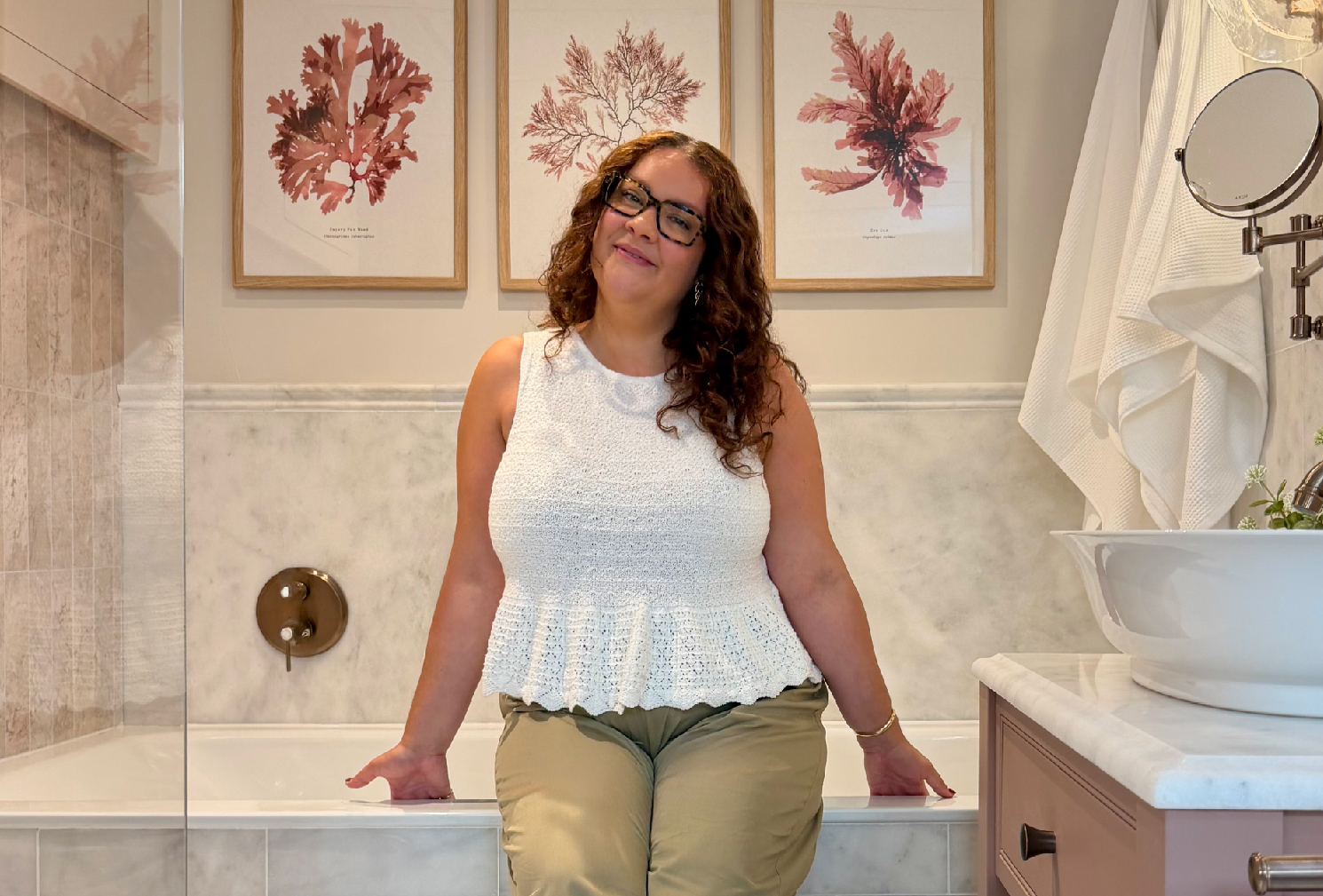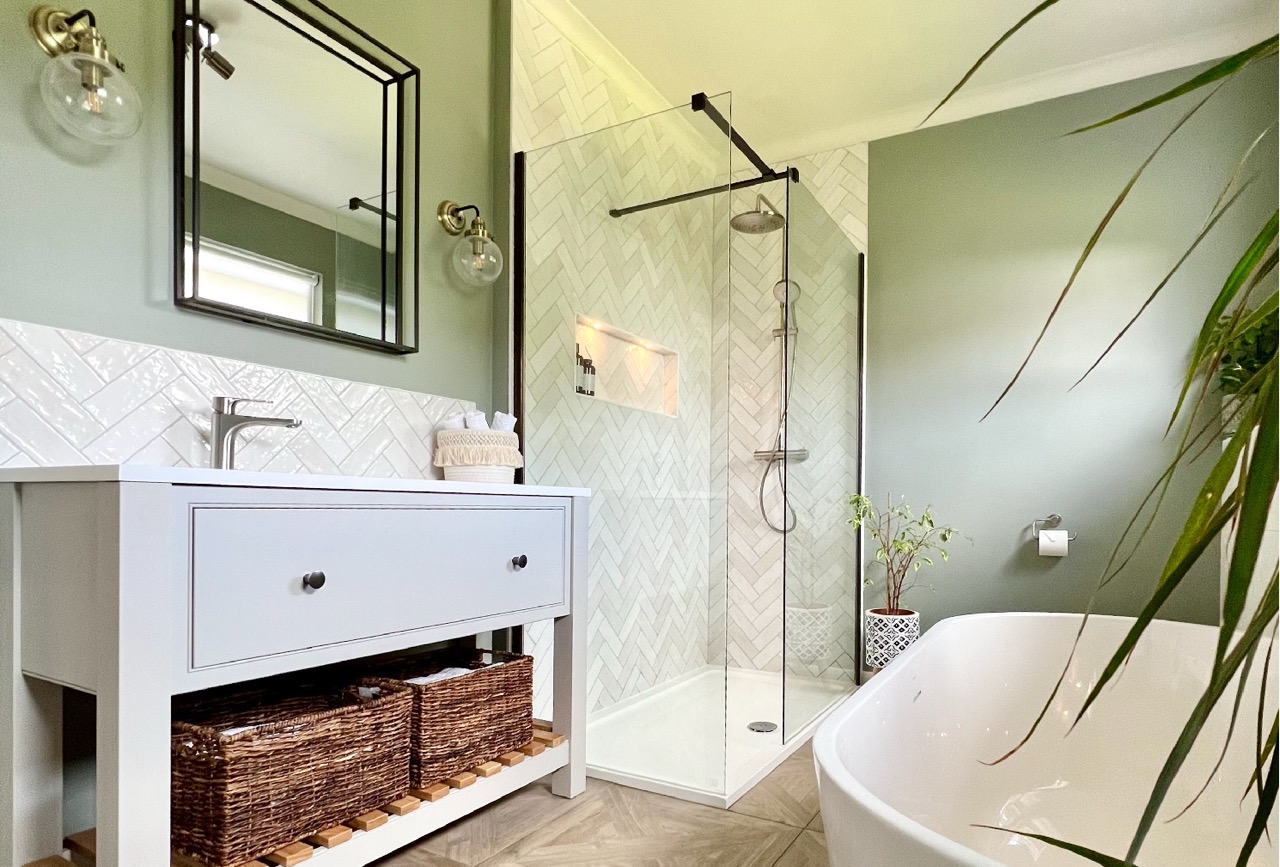
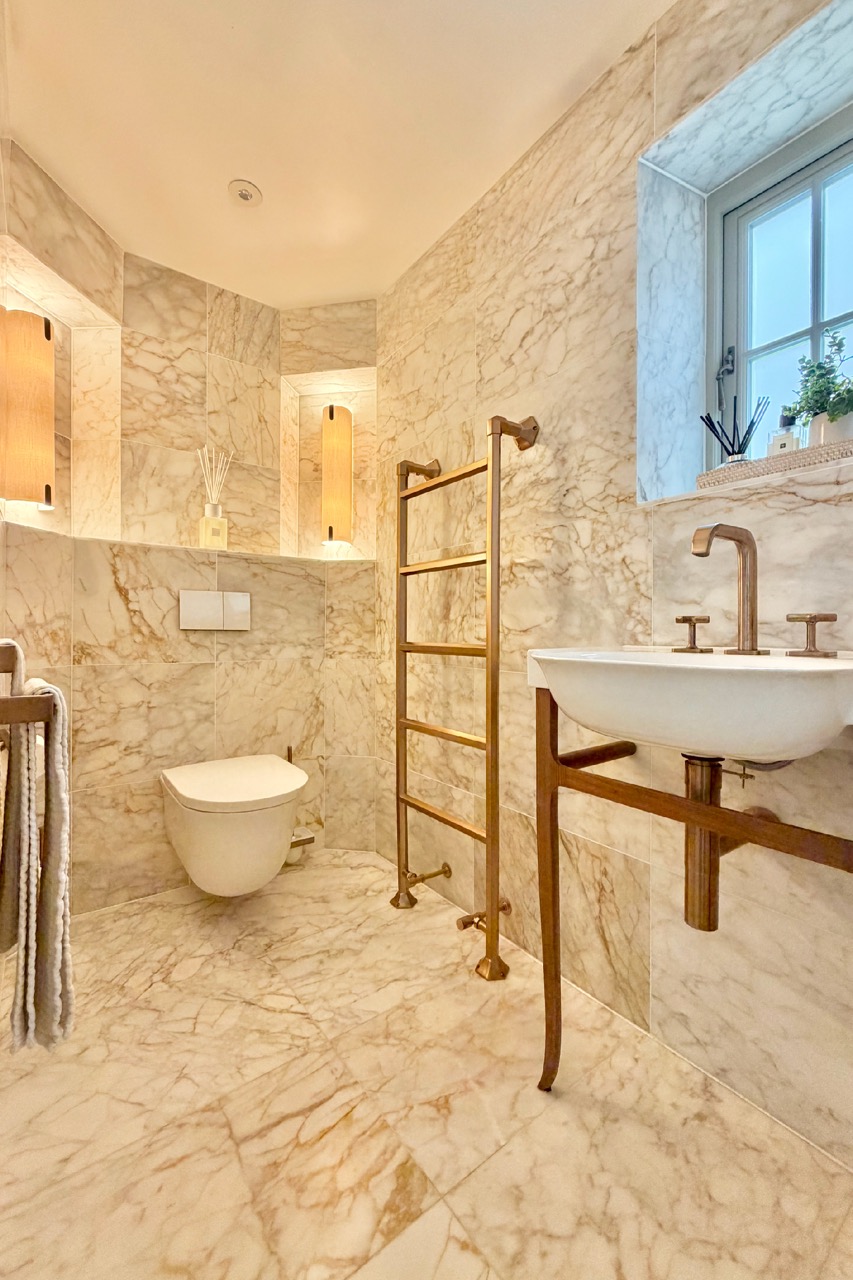
Building a design business in a place without an established design culture presented Justine Bullock with a choice. She could leave Wales for a larger market, or she could stay home and build the kind of design practice she believed should exist there.
She chose the latter.
Nearly a decade later, The Tap End has grown from a self-funded startup into a six-person studio specializing in bathroom design. The growth has been intentional. Bullock has resisted expanding simply because opportunities appeared, choosing instead to spend years establishing the studio’s expertise before gradually considering what might come next.
That patience reflects a philosophy that runs through both her design and her approach to business. Bullock is interested in doing something exceptionally well, building relationships that last, and creating an environment where clients and her team feel genuinely supported.
Finding Her Focus
Bullock originally studied fashion and briefly worked in the industry, but the environment never felt like the right fit. Coming from a small village in Wales, she found the culture too competitive and impersonal. A move into interiors proved far more natural.
She spent seven years managing another designer’s interior design company, where one part of the business captured her attention more than anything else: luxury bathrooms. She was drawn to their technical complexity and began to see specialization as an opportunity.
During a supplier trip to Miami with her employer, the difference between their visions became clear. Bullock believed the company should narrow its focus around the areas that were working particularly well, while the owner wanted to continue pursuing broader interior design. Sitting thousands of miles from home, Bullock realized that if she wanted to build the focused business she imagined, she would have to do it herself.
About a month later, she handed in her notice.
Her original ambitions were modest. Bullock imagined selling perhaps two bathrooms a month, bringing her dog to work, closing the studio when the weather was beautiful, and enjoying a four day workweek. Instead, clients arrived almost immediately.
There was no financial backer waiting behind the business. Bullock sold her car and remortgaged her home to get started, choosing an inexpensive commercial rental and improving it gradually as revenue came in. The studio was not polished or elaborate in those early days, but clients responded to its authenticity and to the people behind it.
Bullock did not start The Tap End entirely alone. She launched it with a business partner who was in her fifties at the time, while Bullock was in her twenties. Bullock describes herself as the driving force behind the vision, and when her partner retired, she bought her out. Today, the company is entirely her own.
Building Design Culture at Home
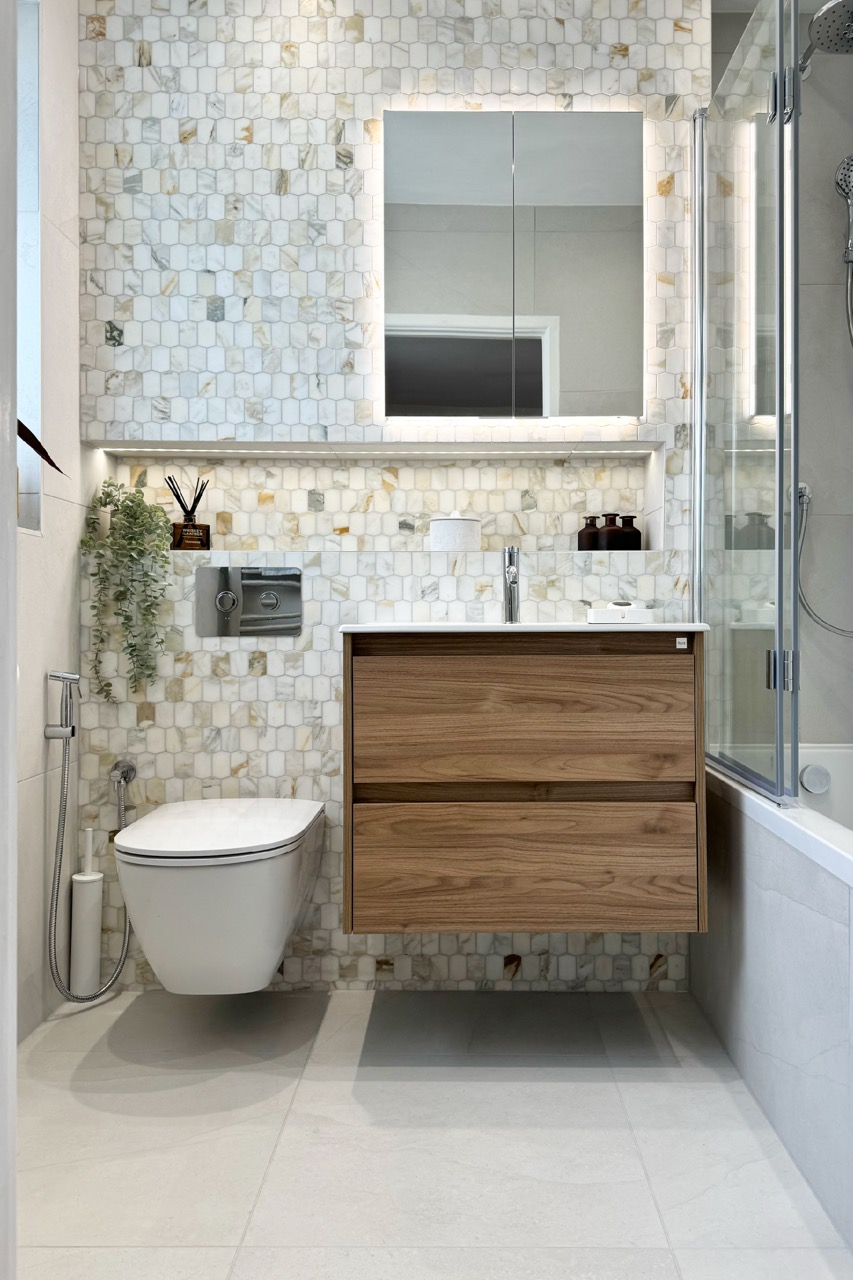
The Tap End’s location has shaped the business almost as much as its specialization. Bullock describes design in her part of Wales as a niche market, particularly compared with larger cities where clients may already understand luxury interiors and recognize specific brands.
Rather than seeing that as a reason to leave, she has spent years educating the community around her.
The studio serves a broad mix of homes, including Victorian and Edwardian properties, architecture from the 1970s, and coastal residences. Budgets vary just as widely. Bullock is less concerned with fitting clients into a particular aesthetic or spending level than with establishing mutual respect and determining whether the studio is right for the project.
Her background in fashion has helped her navigate that range. Fashion taught her that creating something beautiful does not require every element to be the most expensive option. A carefully chosen designer piece can transform an otherwise accessible look, and she applies a similar principle to bathrooms.
The studio may invest in a standout product, architectural detail, or another significant element while making more economical choices elsewhere. The objective is to understand where spending will have the greatest effect and give each client the strongest result possible within the available budget.
That philosophy extends to client education. People rarely arrive at The Tap End asking for a specific bathroom manufacturer. Instead, Bullock and her team explain why one product may offer better quality than another, how it functions, and where investing more makes sense. By the end of the process, clients understand not only what has been selected but why.
Knowing When Not to Grow
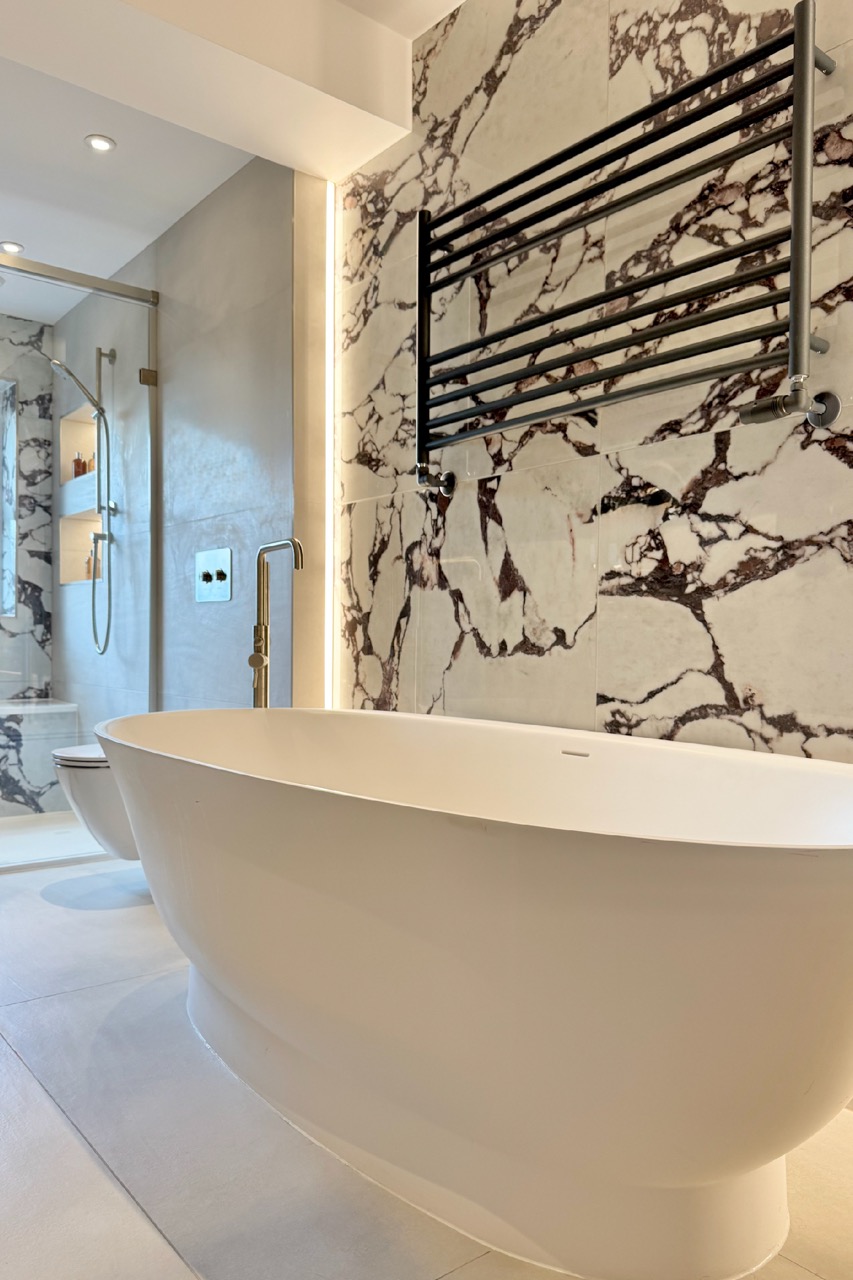
After nearly a decade devoted exclusively to bathrooms, The Tap End is beginning to expand, but Bullock is approaching that evolution with the same restraint that defined the business from the beginning.
Laundry rooms are the first step. They offer enough connection to the studio’s existing expertise to make the transition feel natural without immediately declaring The Tap End a kitchen design company. Wellness is another emerging area, including steam rooms and other features closely connected to the bathroom environment.
Kitchens may eventually follow, but Bullock is in no hurry.
The hesitation is not a lack of ambition. It comes from a fear of spreading the team too thin and compromising the quality of the work. The studio is already busy, and Bullock would rather turn down an opportunity than introduce a service before the team can deliver it at the level she expects.
That same thinking has influenced the size of the company. Bullock is not trying to build the largest possible studio. With six people and a steady pipeline of work, her focus is on becoming better rather than simply becoming bigger.
Her team’s wellbeing is central to that approach. Bullock remains heavily involved in the daily operation of the company, handling everything from clients and presentations to marketing and photography. She describes her schedule as a nine to five followed by a five to nine, but she works deliberately to prevent that pattern from becoming the expectation for her employees.
She wants her designers to leave on time, disconnect when they are off, and have enough mental space to remain creative. Protecting that environment can reduce Bullock’s own creative energy, particularly when administrative responsibilities take over her day, but she sees it as part of building a healthier business.
Finding Inspiration Beyond the Studio
When Bullock needs to restore her own creative energy, she often goes to Marrakesh.
She visits several times a year, sometimes booking a short trip simply because she feels depleted. The colors, food, architecture, hospitality, and sense of discovery provide a reset. She is particularly drawn to the contrast between unassuming streets and the extraordinary spaces hidden behind doors, as well as the riads organized around internal courtyards.
That connection goes beyond aesthetics. Bullock is learning the language and hopes that The Tap End may eventually establish business ties there.
Marrakesh also reflects something she values deeply in her own studio: the intersection of interiors and hospitality. She wants visiting The Tap End to feel different from walking into a conventional bathroom retailer. Clients are welcomed into the studio, educated rather than simply sold to, and invited into a process that often develops into a lasting relationship.
Bullock sees that warmth as distinctly connected to Wales. She is a homebody who wanted to return after experiencing a more competitive professional life elsewhere, and she has no interest in leaving simply because another city might offer a more established design market.
“If we don’t want to leave where we live, we got to bring design to where we live.”
Building Something That Once Felt Impossible
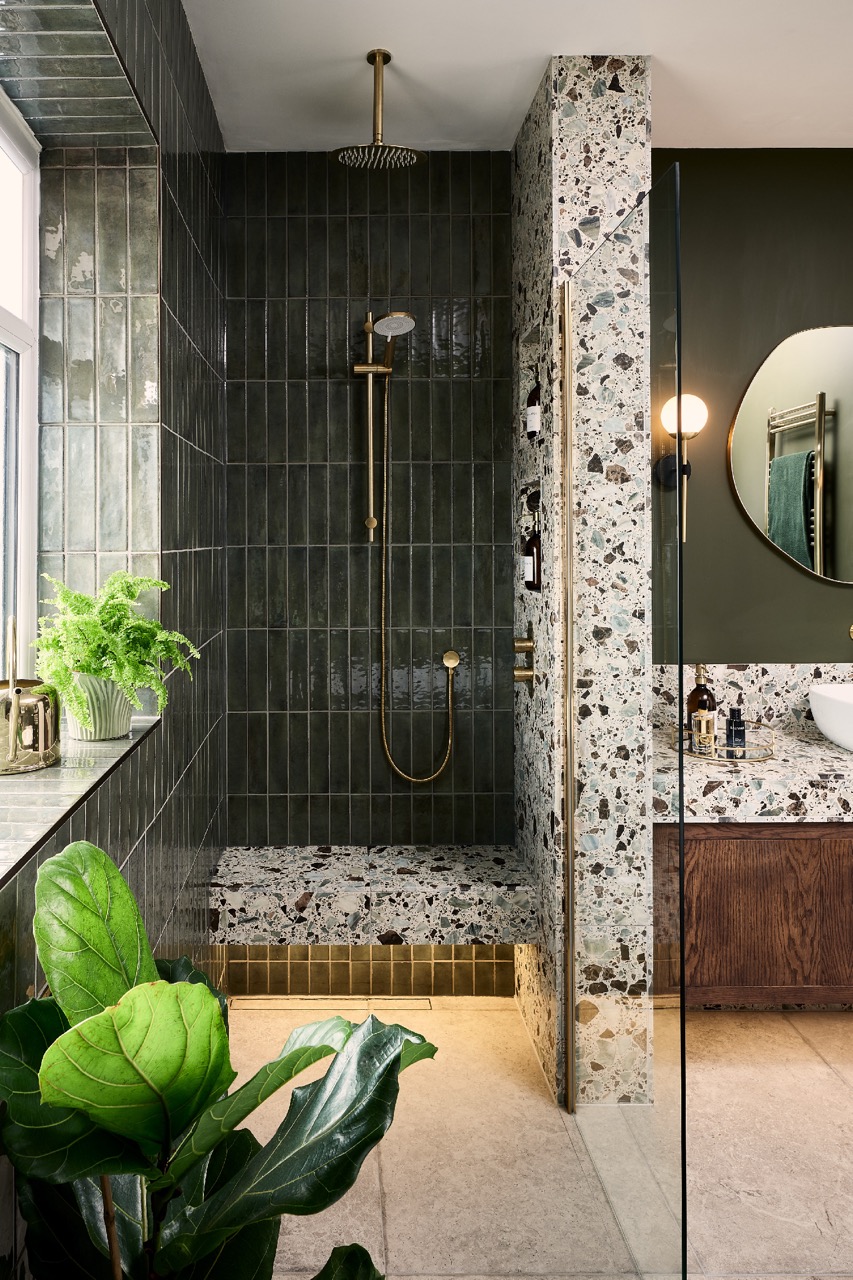
For all the awards, projects, and growth that now surround The Tap End, Bullock’s greatest source of pride is much more personal.
She grew up in a community with very little money and without examples of the kind of career she eventually created. She did not grow up around successful businesses or design projects, but she knew from an early age that she wanted to work in an industry where she could make things beautiful.
That path took her through fashion, managing someone else’s interior design company, and eventually risking her own financial security to create The Tap End. What began with an inexpensive rental and gradual improvements has become an established studio working in remarkable homes and supporting a team Bullock is deeply proud of.
Privately, that history remains a source of perspective when running a design business gets difficult.
“I’m living the life that I could only have seen in magazines and dreamed of.”
As The Tap End approaches its next chapter, with a rebrand, new areas of expertise, and the possibility of future expansion, Bullock is still applying the discipline that got the studio this far. She is not interested in changing simply for the sake of change.
For a business built in a place where high end bathroom design once required years of explanation, the goal remains remarkably straightforward: stay rooted, keep raising the standard, and continue bringing exceptional design to the community Bullock never wanted to leave.