Co Founder and Principal – AAHA Studio
Background
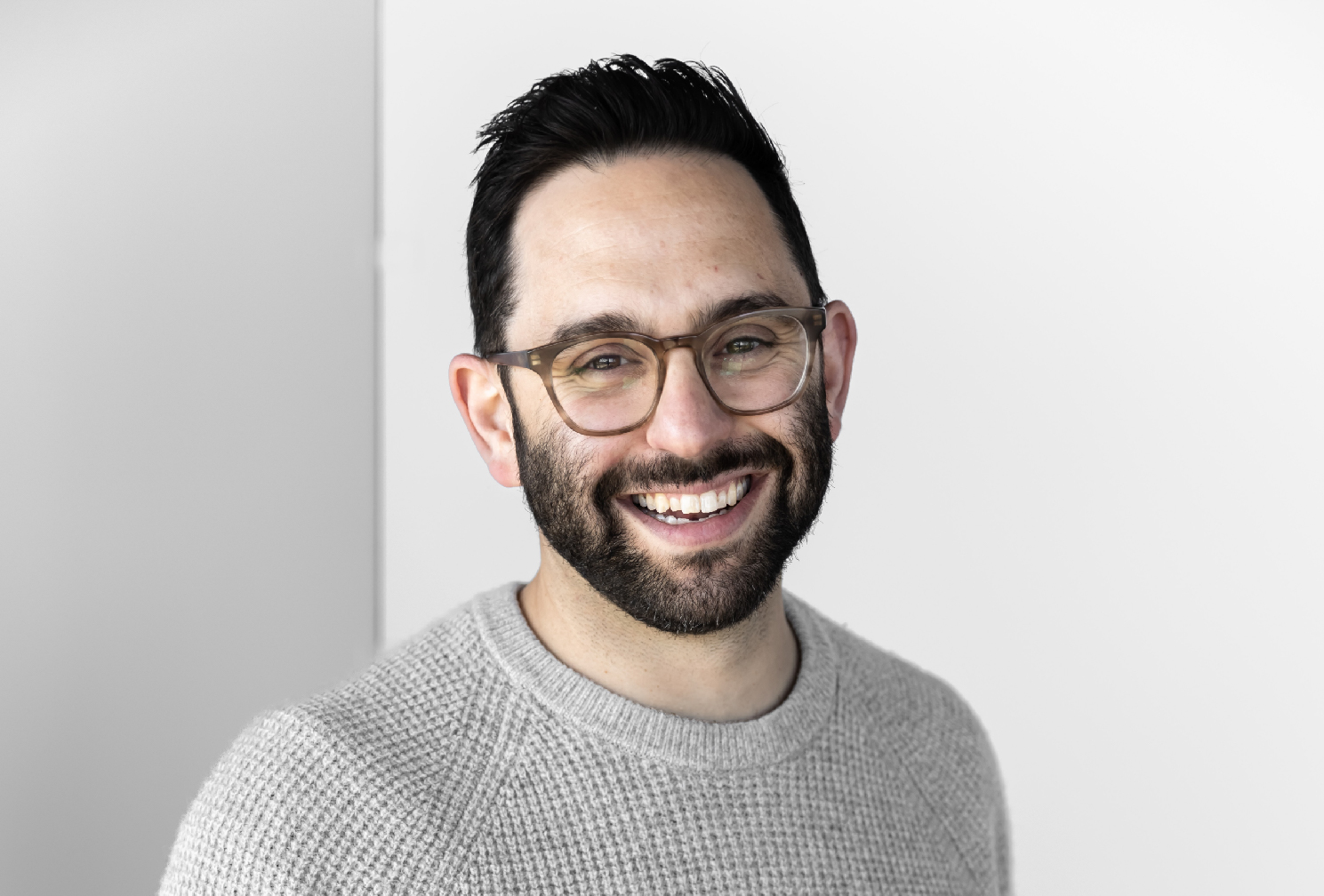
Aaron Leshtz is the co founder and principal of AAHA Studio, a Los Angeles based architecture and design practice he leads alongside Harper Halprin. Raised in Southern California, Leshtz followed an early path into architecture that closely paralleled Halprin’s. Both attended USC’s five year architecture program, studied architecture abroad in Italy, spent a summer practicing in London, and moved to New York after graduation in 2008.

The timing of that move placed Leshtz at the beginning of his professional career during the financial crisis. Working in a smaller team gave him significant responsibility early on, while the nature of the projects challenged the conceptual, modern architecture he had encountered in school. The experience introduced him to interiors, custom materials, artisans, and highly detailed projects, while teaching him to separate personal taste from the broader principles of quality design.
After five years in New York, Leshtz and Halprin returned to Southern California to be closer to family and establish the next stage of their careers. Leshtz completed his licensing exams and continued working remotely on a New York project that was already in construction before taking on freelance work and positions with Los Angeles firms. His experience included commercial tenant improvement projects before he moved into residential architecture at Belzberg Architects in Santa Monica, where he gained valuable knowledge of the Los Angeles residential market, construction processes, and local professional network.
As Halprin’s independent practice grew, Leshtz began contributing during nights and weekends, helping with drafting, drawing sets, redlines, and other project needs. He eventually divided his time between both practices before joining Halprin full time in July 2017, marking the beginning of his full commitment to what would become AAHA Studio.
Approach
Leshtz’s approach to design reflects lessons developed across different project types, styles, and markets. His early experience in New York taught him that a project does not need to reflect his personal aesthetic to offer meaningful lessons about proportion, materials, craftsmanship, and execution. That distinction between style and quality continues to inform the way he evaluates design today.

At AAHA Studio, that perspective translates into a process driven practice rather than one defined by a singular visual identity. Leshtz does not describe the firm as having a specific design voice that clients hire simply to reproduce. Instead, he sees one of the studio’s strengths as its ability to listen, study a client’s references, and distill a large collection of ideas into a clearer understanding of what the client is actually seeking.
That process also requires knowing when additional expertise is needed. Leshtz values being able to acknowledge when the studio does not have an immediate answer, then finding the information or people necessary to solve the problem. For him, strong design comes from putting many different pieces together thoughtfully rather than assuming the designer must know everything from the beginning.
Beyond Design
Leshtz approaches entrepreneurship with much the same project based thinking he brings to architecture. Rather than attempting to establish every component of AAHA Studio before the work existed to support it, he and Halprin built the practice incrementally. New infrastructure, administrative support, and systems were added as the studio encountered new needs, allowing the business to develop alongside its projects.

That philosophy extends to growth. The objective has not been to make AAHA Studio larger simply for the sake of expansion, but to build intentionally while maintaining the close communication and culture of a smaller practice. Looking back, Leshtz sees the gradual nature of the studio’s development as one of the reasons the business was able to take shape organically.
Outside of the studio, he finds an unexpected source of creative perspective in watching his children make things. Their ability to build according to their own stories and ideas, without extensive research or concern about a predetermined correct solution, has made him reflect on how easily adults can overthink the creative process.
For Leshtz, that observation connects back to both architecture and entrepreneurship. AAHA Studio itself was built one piece at a time, through experimentation, learning, and an acceptance that not every answer needs to exist at the beginning. His perspective remains grounded in curiosity, thoughtful problem solving, and the willingness to recognize when there is still something to learn.