Co Founder and Principal – AAHA Studio
Background
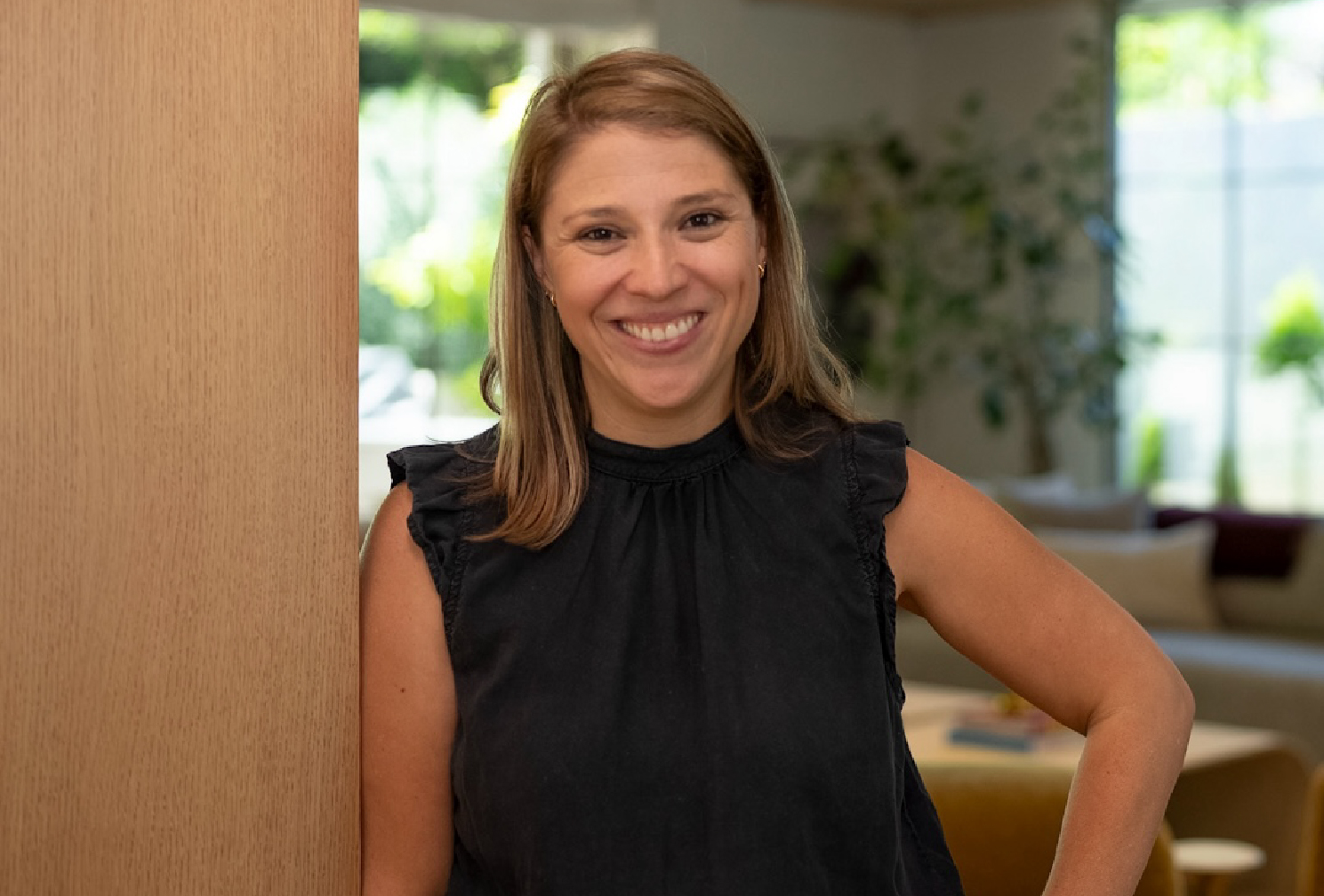
Harper Halprin is the co founder and principal of AAHA Studio, a Los Angeles based architecture and design practice she leads alongside Aaron Leshtz. Raised in Southern California, Halprin knew from a young age that she wanted to become an architect. She attended USC’s five year architecture program, studied architecture abroad in Italy, and later spent a summer practicing in London before moving to New York with Leshtz in 2008.

Her years in New York expanded her understanding of architecture beyond the conceptual approach she had experienced in school. Working closely with interiors, artisans, custom materials, and highly detailed residential and retail projects gave her extensive hands on experience during a period when small teams meant taking on significant responsibility early in her career. Among the projects she worked on was the Rosenblatts’ penthouse apartment in New York, alongside retail rollout work.
After five years in New York, Halprin and Leshtz returned to Southern California to be closer to family and continue building their careers. Halprin became licensed and joined a local interior design studio as an in house architect. When she left that position in 2015 and learned days later that she was pregnant with their first daughter, she decided to freelance rather than immediately pursue another position. A simple website announcing that work quickly attracted interest, and what began as a practical decision developed into the foundation of AAHA Studio. Leshtz gradually became involved before joining the practice full time in 2017.
Approach
Halprin’s approach is rooted in process rather than a predetermined aesthetic. Her experience in New York taught her to separate personal taste from the fundamentals of good design, a lesson that continues to shape the studio’s work across residential, hospitality, commercial, and retail projects.
Rather than asking clients to conform to a recognizable AAHA Studio style, Halprin focuses on understanding the practical framework behind each project. In a residence, that can mean examining how someone lives and moves through the home. In a commercial environment, it can mean understanding how a business operates. Those underlying needs become part of a process that allows the finished work to vary significantly in style while remaining grounded in thoughtful design decisions.
Client relationships are equally important to that process. Halprin believes taking care of clients requires honesty, including conversations about budgets, competing ideas, or decisions that may need to be reconsidered. For her, customer service is not about simply agreeing with a client. It is about listening closely, offering professional guidance, and helping clients reach an outcome that responds to what they need while maintaining the studio’s design perspective.
Beyond Design

Halprin brings the same willingness to learn to the business side of AAHA Studio. Rather than approaching entrepreneurship through rigid long term plans, she and Leshtz have allowed the practice to develop incrementally, responding to challenges as they arise while remaining intentional about the projects they pursue. Halprin describes opportunities through three considerations: whether a project offers a learning experience, is rooted in an important relationship, or presents an opportunity for strong design.
That curiosity also influences how she approaches the studio as an employer. When AAHA Studio began expanding its team, Halprin researched how a small practice could provide meaningful incentives and benefits, seeking outside expertise when necessary rather than assuming they needed to have every answer internally. For her, remaining open to learning is an essential part of entrepreneurship.
Outside the studio, travel remains an important source of creative input. As running a business and raising a young family have made frequent travel more difficult, Halprin also looks closer to home through design fairs, antique and vintage shopping, and studying how furniture and objects are constructed. A recent trip to Japan offered an opportunity to immerse herself again in architecture, urban environments, food, and design, reinforcing the importance of continually seeking new perspectives.
Across both her creative work and her role in building AAHA Studio, Halprin’s approach remains grounded in curiosity, thoughtful process, and an openness to learning as the practice continues to evolve.