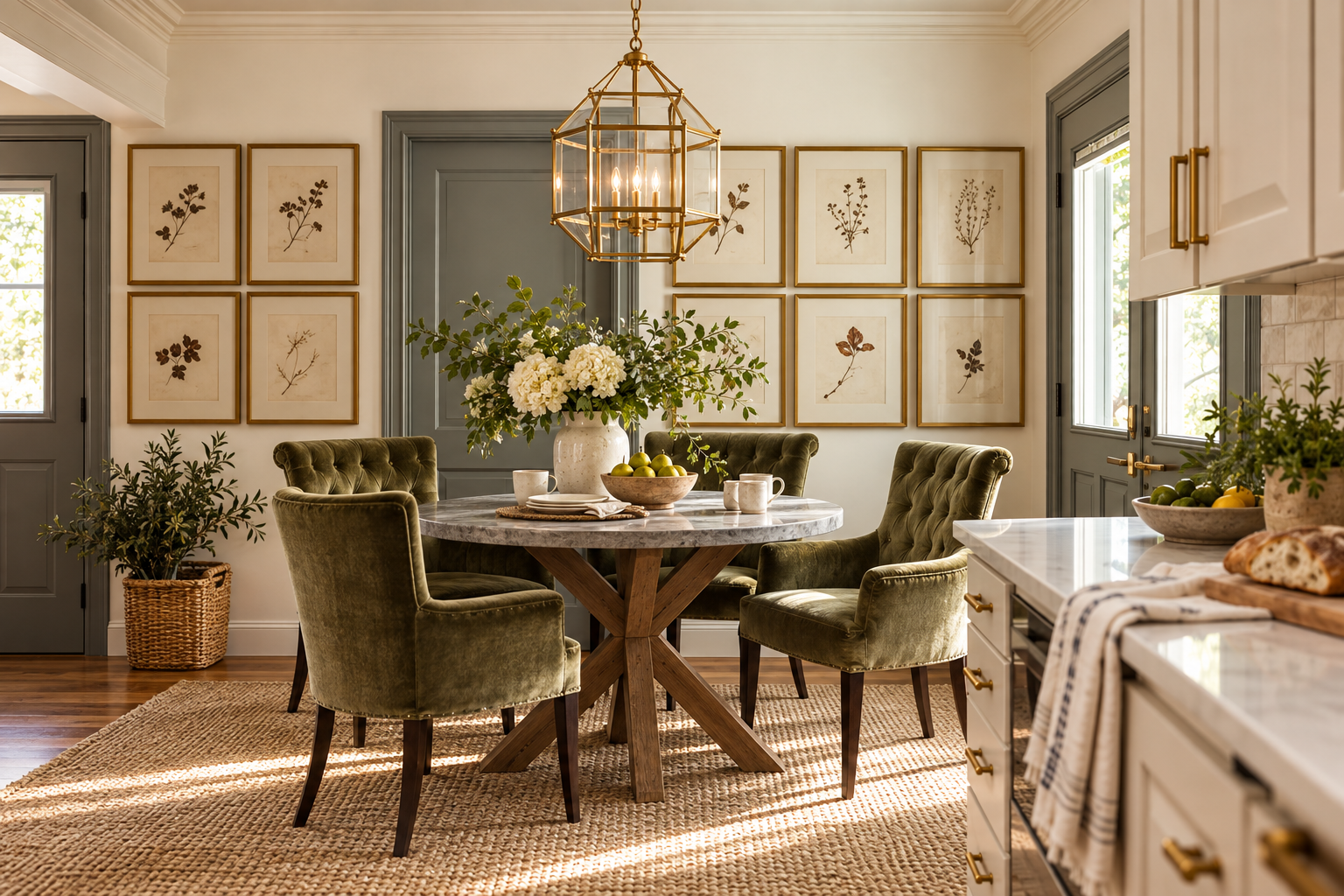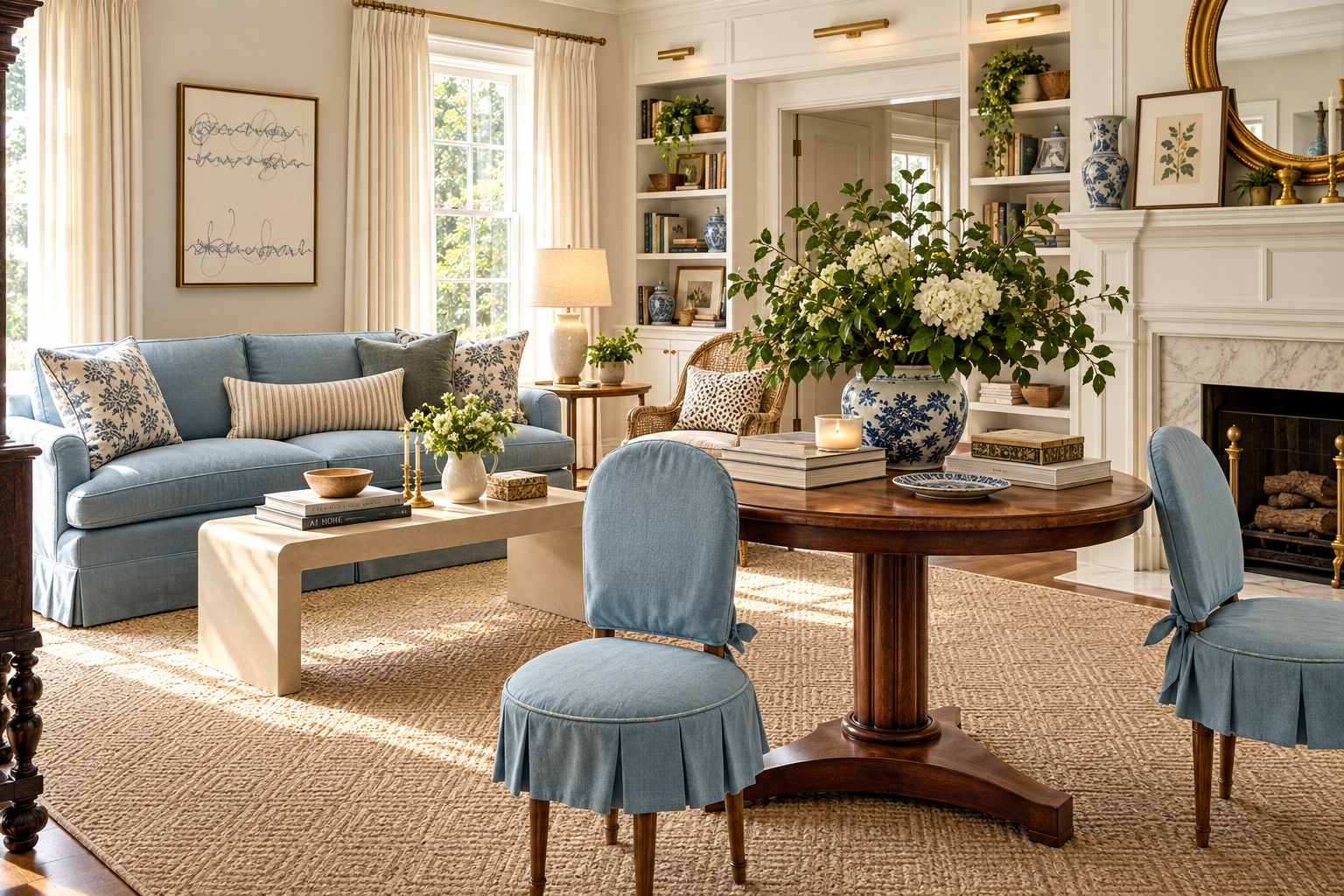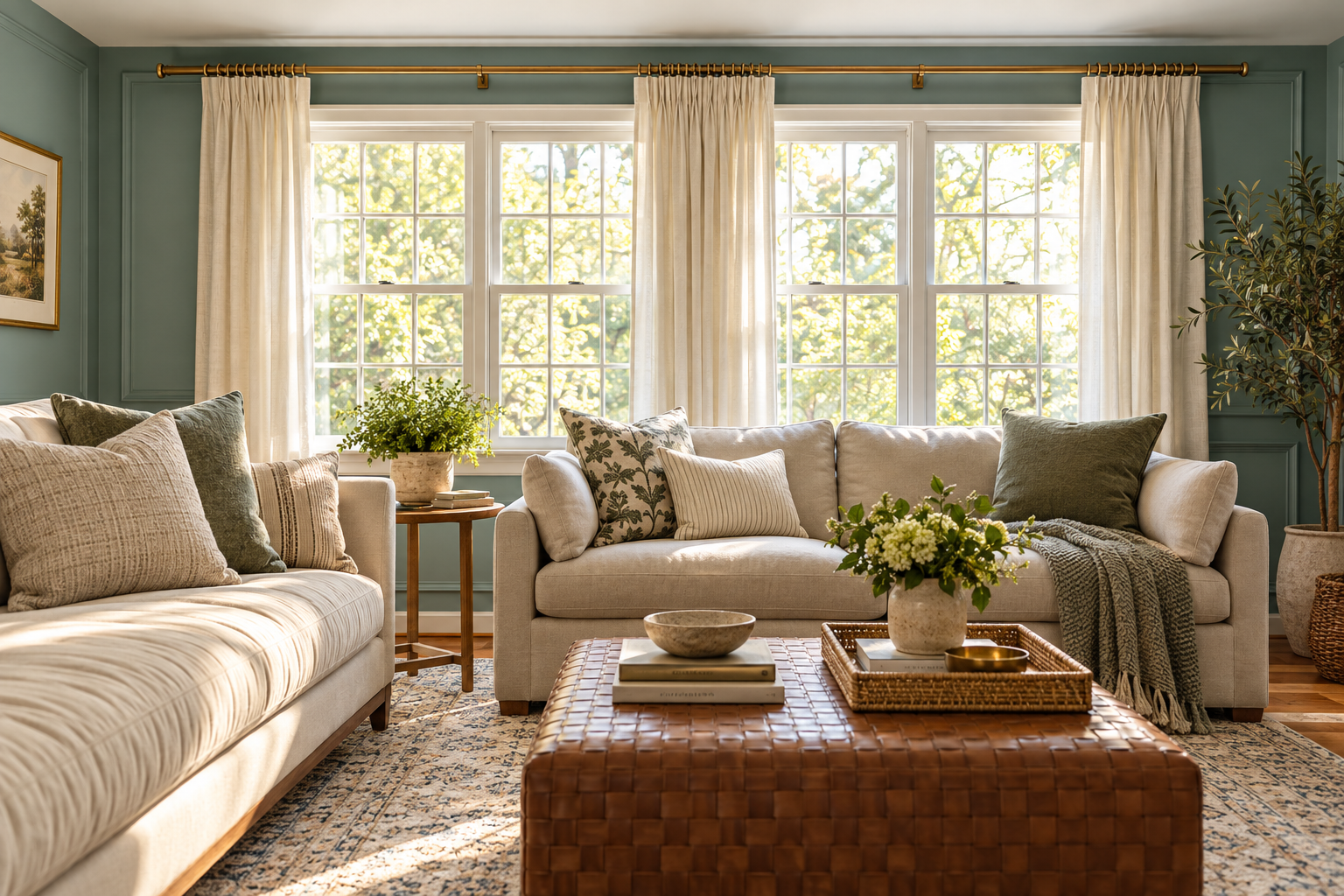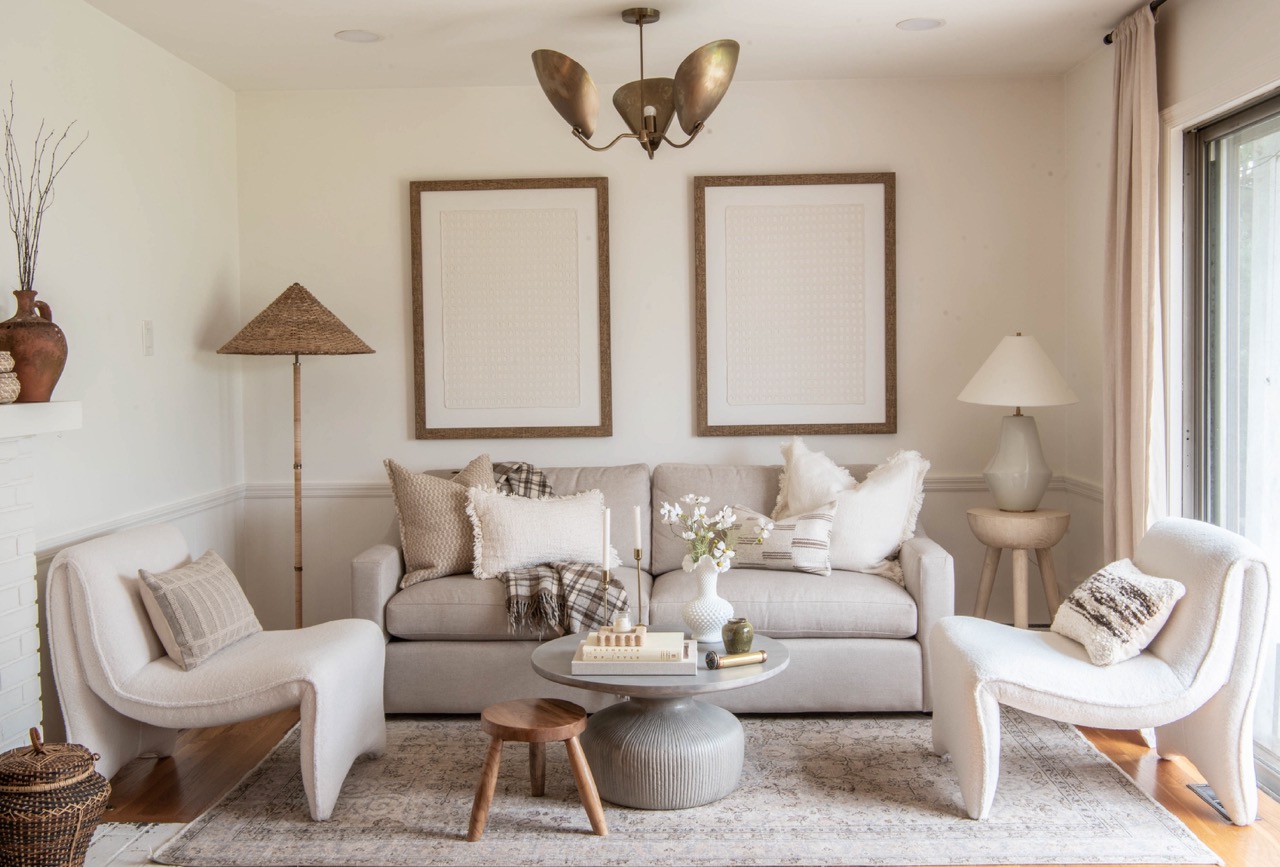
For Erin Nordholt, the path to interior design was not direct. Before founding Hackett House Studio, she spent nearly a decade in finance, building a successful career at Morgan Stanley after initially entering college with plans to become an attorney.

Design, however, had been present much earlier. From asking to visit a massive interiors showroom as a child to following designers and listening to conversations about the business of interior design years before changing careers, the interest never really disappeared. It simply took time for Nordholt to recognize that it could become her profession.
Today, six years into building Hackett House Studio, that career change has evolved into something larger. Her focus is increasingly moving toward fewer, more deeply involved projects, thoughtful architectural interiors, historical context, and homes built with materials intended to last.
Finding Her Way to Design
Nordholt entered Ohio State thinking she would eventually attend law school. Practical about the cost of education, she worked full time while attending school and even took jobs with attorneys to better understand the profession before committing to law school.
A career fair ultimately sent her in another direction. She received an opportunity with Morgan Stanley, initially joining as an assistant before earning the federal licenses necessary to sell financial products and eventually developing her own clientele.
“I was probably in the business for just shy of a decade.”
For much of that time, Nordholt did not feel that she was sacrificing another career. She was focused on learning, building skills, and establishing financial stability. It was only as she approached her thirties that a different question began to emerge.
“Am I actually doing the thing I love? No, I’m not.”
Interior design had been an interest since childhood. Nordholt remembers asking her father to take her to a large Columbus showroom called The Great Indoors for fun when she was around 12. As a teenager, she tore a page from a catalog and asked him to recreate the bedroom exactly, an early moment when her family began recognizing her interest in interiors.
That interest continued throughout her finance career. She decorated her own home, followed designers online, and several years before leaving finance began listening to A Well Designed Business, a podcast focused specifically on the business of interior design.
By March 2020, years of interest in the industry and growing frustration with aspects of her finance career had converged. A few days into the COVID shutdown, Nordholt made the decision.
“I remember just kind of looking at my husband and being like, ‘Yeah, I’m not going back to that office.’”
Building from What She Had

Nordholt entered interior design without an established portfolio or a significant renovation of her own to showcase. For roughly the first three years, she operated the business alone and took on nearly every opportunity that came her way.
“I was saying yes to everything. That’s how I got started.”
Those early projects became her education in the realities of running a design firm. Her finance experience had given her knowledge of investments and financial planning, but she quickly discovered that managing the accounting, taxes, client budgets, expectations, and operations of a small design business required an entirely different skill set.
As the studio developed, so did the team. Today, Nordholt works with an operations manager who helps oversee purchasing and order tracking for large furnishing projects, along with a junior designer who assists with sourcing, drawings, measurements, site visits, and other design responsibilities.
The workload remains demanding. Nordholt has established Mondays as meeting free days so she can focus on the work that is difficult to accomplish while moving between projects, clients, and job sites throughout the rest of the week.
“I am very much a no Monday meetings type of gal.”
That structure is one of the systems she has developed after years of learning what running the studio actually requires.
Designing for How a Home Feels
Nordholt’s own home helped her understand why interior design mattered to her beyond aesthetics. She began noticing how seemingly simple elements of her surroundings affected her mood, including the experience of waking up, getting coffee, and sitting in a living room filled with textiles, books, and objects she had collected.
“I recognized really early on that you can go into a space and it would influence your mood.”
That realization became part of the purpose behind her work. One of the principles Nordholt brings to every project is encouraging clients to keep what they already have and build around it rather than starting from scratch. For her, the pieces a family has accumulated over time — the inherited lamp, the well worn chair, the art collected on travels — carry a kind of meaning that no amount of new purchasing can replicate. Working with what exists rather than replacing it is not a compromise. It is often what makes a home feel genuinely personal.
While Nordholt acknowledges that interior design can easily become centered on consumption, she does not believe it has to operate that way. Thoughtful decisions about what enters a home can consider environmental and social responsibility while also creating an environment that positively affects the people living there. She is direct about not wanting to contribute to landfill waste and actively discourages clients from discarding pieces that can be reimagined or repurposed within a new design.
For Nordholt, the objective is not simply acquiring more. It is understanding what belongs in a space, why it belongs there, and how those decisions contribute to daily life.

Going Deeper Instead of Wider
As Hackett House Studio has grown, Nordholt has become increasingly clear about the kind of growth she wants.
“I like my team being small. I like working on a few projects.”
Rather than expanding simply to manage more work, she wants the studio to become more selective and more deeply involved in each project. After years of working across furnishing projects, renovations, kitchens, and custom new builds, she sees the next stage as an opportunity to bring that experience into a narrower area of focus.
The studio has been building its knowledge on the architectural side of the work, with Nordholt particularly interested in incorporating historical details and context into new construction.
Her goal is to contribute earlier and more comprehensively, helping create new homes that carry some of the thoughtfulness and character associated with buildings that have existed for generations.
“I want to work more deeply on a handful of projects and less wide on more projects.”
That direction has also sharpened her perspective on materials and construction. In her own Columbus neighborhood, Nordholt has watched older houses disappear while expensive new construction takes their place, often using materials she considers less thoughtful despite the price of the finished homes.
She sees an opportunity to advocate for something different.
Choosing Materials with Longevity
For Nordholt, historical context is connected not only to aesthetics but also to craftsmanship, longevity, and value.
“There’s an inherent value in things that are thoughtfully crafted.”
She is particularly interested in natural materials and traditional construction choices that can endure over time. As she sees it, synthetic substitutes may recreate an appearance, but they do not necessarily offer the same durability or intrinsic value.
That distinction can be difficult for homeowners to recognize, particularly when newly constructed homes using less expensive materials are marketed at similar price points to historically sensitive renovations or more thoughtfully constructed new homes.
Nordholt wants Hackett House Studio’s future work to sit on the other side of that equation, contributing to homes where materials and architectural decisions are made with greater intention.
“I want to be on the other side of history where we’re actually, like, building real fireplaces out of masonry and brick again.”
Making Room for Creativity

Running a studio can also complicate the creative work that brought Nordholt into the industry in the first place.
During a particularly burned out period, she recently found herself unexpectedly designing a bedroom on her computer. There was no client, deadline, or list of requirements. She simply began developing the idea.
Within about 30 minutes, the room had taken shape.
“My cup felt more full.”
The experience reinforced something Nordholt keeps written on a physical pin board beside her workspace: “rest is part of the process.”
Client work inevitably brings parameters, from color preferences to functional requirements. Designing something purely for herself removed those constraints and allowed ideas to develop freely again.
For Nordholt, creativity sometimes requires making room for it rather than forcing it.
Learning What Entrepreneurship Really Requires
Nordholt is equally candid about the business behind the creative work. Through coaching other interior designers and building an online community where designers discuss the problems they encounter in their businesses, she has seen how easily entrepreneurship can be romanticized.
Her experience has been considerably more demanding.
“You’re going to have to work harder than you did at your 9 to 5.”
The flexibility associated with owning a business comes with another reality. Working from the beach still means working. Weekends and vacations do not necessarily remove the responsibility of answering emails or solving problems.
For Nordholt, the first several years were particularly challenging. Over time, however, systems developed, client relationships improved, and the business began finding a more sustainable rhythm.
“Prepare for it to be harder than you think, but stick through it and be the best problem solver you can be.”
Defining Success Through Service
Among everything Nordholt has built, her greatest source of professional pride is not a particular project, publication, website, or visual accomplishment. It is learning how to provide a better service.
Like many creatives, she initially believed her talent for creating a beautifully appointed room would define her success as a business owner. She learned, as she puts it, that talent is “really only a very small piece of the puzzle.” Most clients are designing their single largest investment — a home that carries deep emotional weight tied to their health, wellbeing, and sense of optimism. Understanding that meant recognizing that clients needed to feel safe throughout the process, not just pleased with the final result.
That process required understanding that clients often experience projects through the accumulated stress of construction. A reaction to one damaged object may carry the frustration of years of decisions, delays, expenses, and compromises behind it.
“You have to live in such an empathetic state when you’re working with your clients.”
At the same time, Nordholt has learned that empathy cannot come at the expense of maintaining a viable business. The studio has continually refined its standard operating procedures to protect both client interests and the company itself — the same systems and processes she now credits as central to giving clients a genuinely good experience.
She readily acknowledges that she did not have those answers when she began. Early projects came with mistakes, lessons, and sometimes financial costs that she absorbed to make things right.
Today, that experience has produced something she values deeply, a group of clients she believes would confidently recommend Hackett House Studio to others.